
Inkludio Training
Erasmus+ KA220
Cooperation partnerships

From theory to writing a KA220 application

The seminar is for organisations ready to design and implement a partnership of greater scale and duration than small-scale partnerships.

Seminar dates

Erasmus+ KA220

The dates of the next seminar have not been announced yet.

Enter your email address to be notified automatically when the seminar dates are published.

Via ZoomJoin from wherever you are.
16 hours over 4 afternoonsThe seminar combines detailed theory with practical exercises on every section of the KA220 application.

This seminar is for you if…

…you are a teacher or a member of staff at a general education school, a vocational education and training provider, an adult education provider, an organisation active in the field of youth or another organisation, and you want to submit a cooperation partnership (KA220) application with partners from at least two other EU Member States or third countries associated to the Programme.

Your organisation already has experience of Erasmus+ projects and is planning a larger-scale partnership.

Cooperation partnerships last between twelve and thirty-six months and involve at least three organisations from three different EU Member States or third countries associated to the Programme. They are funded through one of three predefined lump sums, €120,000, €250,000 or €400,000, which the partnership chooses according to the activities and results it plans. In the seminar, you learn how to choose the right lump sum and how to justify it on the basis of the project's activities.
You have an idea and your partners, but you do not yet know how to organise the project into work packages with clear objectives, activities and results.

The Programme Guide asks for every project to be described in work packages: one for project management and the others for implementation. Each work package has its own specific objectives and deliverables, and the project management work package can receive up to 20% of the lump sum. In the seminar, you practise designing work packages and linking them to the partnership's needs and objectives.

You want guidance from a trainer with real experience of assessing applications.

The trainer has been assessing Key Action 2 applications for Erasmus+ National Agencies since 2020. In the seminar, you examine each application question against the four award criteria and learn how to substantiate the impact of the proposal.

What your participation includes

  • 16 hours of online training

    The seminar takes place over four afternoons via Zoom and combines clear, detailed theory with practical exercises on the different sections of the application.

  • E-workshops in small groups

    In each e-workshop, you work with other participants on hypothetical application examples based on real cases and present your group’s results to all participants.

  • Extra

    The seminar's Padlet

    The Padlet brings together Erasmus+ Programme guides, application-writing checklists and useful links. Once you register, you can access all the materials and save them to your computer. Access remains active until one week after the seminar ends.

  • Extra

    One-hour Q&A session before the submission deadline

    About two weeks before the submission deadline, you meet the trainer online for one hour, and he answers the questions you have sent in advance about your own application.

  • Certificate of attendance

    When you complete the seminar, you receive your certificate of attendance by email, at the address you provided when you registered.

After 16 hours, you will be able to:

  • understand the framework of Key Action 2 and the objectives and rules of cooperation partnerships.

  • read your application through an evaluator's eyes, knowing the four award criteria and the weight of each.

  • formulate objectives that address the Programme's priorities and the needs of the organisations and target groups.

  • design work packages with clear objectives, activities and deliverables, and allocate the lump sum across them in an appropriate and justified way.

  • describe the partnership, the division of tasks among the partners and the coordination and communication mechanisms between them.

  • substantiate the impact of the proposal and plan for sharing the results and ensuring their sustainability.

The seminar programme by day

The first two days are devoted to theory and the last two to practical group exercises, so that each day builds on the previous one.

  1. 1
    Day 1

    Key Action 2 and cooperation partnerships

    The first day introduces cooperation partnerships, their rules and how they differ from small-scale partnerships.

    Theory

    • Participants get to know each other and the seminar's expected learning outcomes are presented.
    • The KA220 action is presented: eligible organisations, project duration, the predefined lump sums and the requirements for the composition of the partnership.
    • The theory is consolidated through hypothetical examples of good and poor practice and comprehension questions.
  2. 2
    Day 2

    The KA220 award criteria

    The second day analyses the four award criteria and links them to the application questions.

    Theory

    • The four criteria are analysed, namely relevance of the project, quality of the project design and implementation, quality of the partnership and the cooperation arrangements, and impact, together with the maximum score for each.
    • All application questions are presented, with a suggested answer structure and content for each, in line with the criteria.
    • Participants learn to assess their own proposal before submission through hypothetical scenarios and comprehension questions.
  3. 3
    Day 3

    Answer structure and work packages

    The third day is devoted to practical exercises on answer structure and work package design.

    Practical exercises

    • Participants work in small groups in Zoom breakout rooms.
    • Each group matches application questions with suitable answers, with a focus on innovation, synergies between different fields and EU added value.
    • Each group then sketches the work packages of a hypothetical project and develops the activities of one of them.
  4. 4
    Day 4

    Evidence-based impact and putting the application together

    The fourth day completes the preparation of the application: substantiating impact and bringing all its sections together.

    Practical exercises

    • The groups draft evidence-based answers on impact, based on hypothetical application scenarios.
    • Each group presents its work to all participants and receives feedback before the seminar closes.

What participants say about this seminar

«An excellent training experience! I attended the training on Erasmus+ Accreditation KA120 applications and Strategic Cooperation Partnerships KA220. The training was substantial and provided all the tools and knowledge I needed to meet the demands of the applications. Thanks to the right guidance and the expertise my team and I acquired, our accreditation application was successfully approved. I recommend Inkludio Training to anyone looking for serious and effective training!»
«I attended the seminar on the Erasmus+ KA220 application, which was very well organised, with rich training material, worksheets, discussion with examples and continuous explanations, and even practical exercises. It encouraged you to move beyond dry theory and try to apply what you had just been taught, helping you absorb it. It provides excellent expertise in planning, writing and submitting a new Erasmus+ application. Mr Barmpas's guidance as the seminar's trainer and speaker was very important, even for beginners in this field like me. Excellent throughout the presentation.»
«I consider the seminar on the KA220 Erasmus+ application to be one of the most comprehensive and well-organised training activities in the field of European programmes. The trainer presented the application's structure and content with particular clarity and a systematic approach, analysing all its fields in full, answering every question thoroughly and, through targeted workshops, providing substantial support in turning ideas into mature and feasible proposals. This is training of a high professional standard, with clear added value for organisational staff and teachers involved in planning and implementing Erasmus+ projects.»
Tasos Barmpas

Our trainer

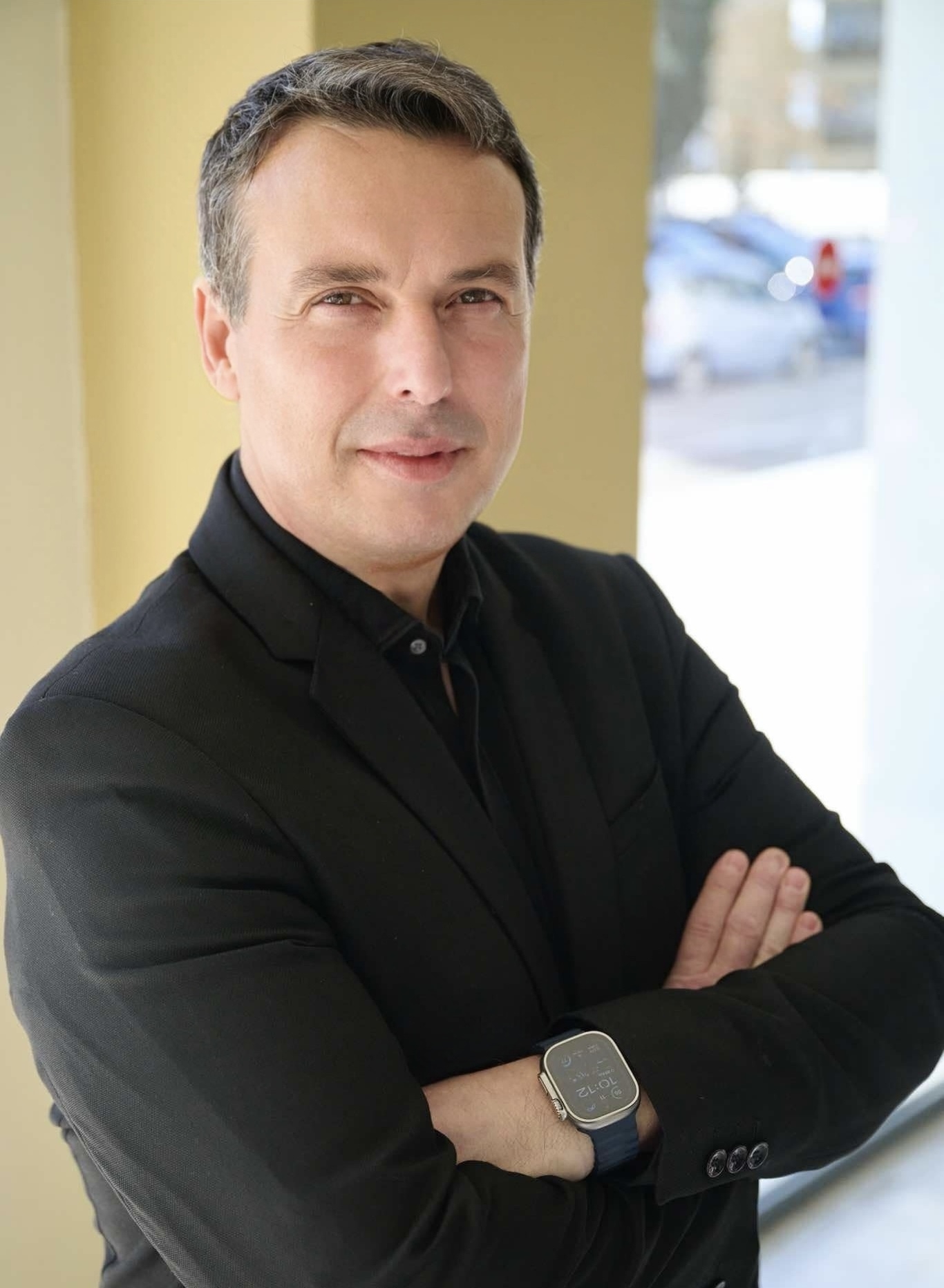
Tasos Barmpas

  • Tasos Barmpas worked for six years at the Erasmus+ National Agency of IKY (2019–2025), first as Project Manager and then as Coordinator of Key Action 2, also responsible for the school education sector.
Read his full profile

From theory to writing a KA220 application

For any question, ask or write to us.

Get notified about the dates of the KA220 seminar

Enter your email address and we will notify you when the dates of the next seminar are announced.

We use cookies to improve your experience. Read our Cookie Policy for more information.